Roll20 Alternatives For Faster Setup And No Player Accounts
If your group is comparing Roll20 alternatives or other sites like Roll20, Far Reach Co is worth a serious look when you want lower-friction online sessions, faster browser setup, and a cleaner path from one-shot tables into persistent campaigns.
No-Signup VTT | Virtual Tabletop For D&D 5E
Why Groups Switch
Sites Like Roll20
When Far Reach Co Fits Better
When Roll20 May Fit Better
Player Friction
Connected Tools
Get Started
Why Groups Look For A Roll20 Alternative
Most groups start comparing alternatives to Roll20 when setup friction starts stealing time from the actual game.
- Too much onboarding - more clicks and more account steps before the first scene starts.
- Session drag - tool complexity gets in the way of quick tactical play.
- Disconnected tools - campaign context, rules reference, and character workflow live in too many separate places.
If You Are Comparing Sites Like Roll20
Most people searching for sites like Roll20 or websites like Roll20 are not looking for an identical clone. They usually want the same core browser-VTT job with less friction around setup, invites, and live play.
- For one-shots - a faster share-link flow matters more than a heavier platform workflow.
- For recurring groups - you still want a path into campaign organization, sheets, and rules support.
- For browser play - lighter load and cleaner controls can matter more than a bigger legacy ecosystem.
- For groups checking apps like Roll20 - the real comparison is setup speed, player friction, and table readability.
When Far Reach Co Is The Better Fit
- You want faster starts - create a table, share a link, and get players in quickly.
- You want lower player friction - useful for one-shots, tests, and low-friction recurring groups.
- You want a lighter session surface - faster load, cleaner interface, and less overhead during live play.
- You want practical GM tools - pins, portals, templates, layered controls, and asset freedom without feature bloat.
- You want a connected stack - VTT, Wyrlds, SRD lookup, 5E character sheets, and radio can work together.
When Roll20 May Still Be The Better Fit
This is not a claim that Far Reach Co replaces every Roll20 use case.
- Marketplace depth - if your group depends on a larger store and mature module catalog, Roll20 may still be stronger.
- Existing ecosystem lock-in - if your campaign is already deeply invested there, switching may not be worth the disruption.
- Specific workflow habits - some groups prefer the platform they already know even if it is heavier.
- Dynamic-lighting-heavy expectations - if that style of simulation is central to your setup, Roll20 may still align better.
Player Friction And Session Load Are The Big Differences
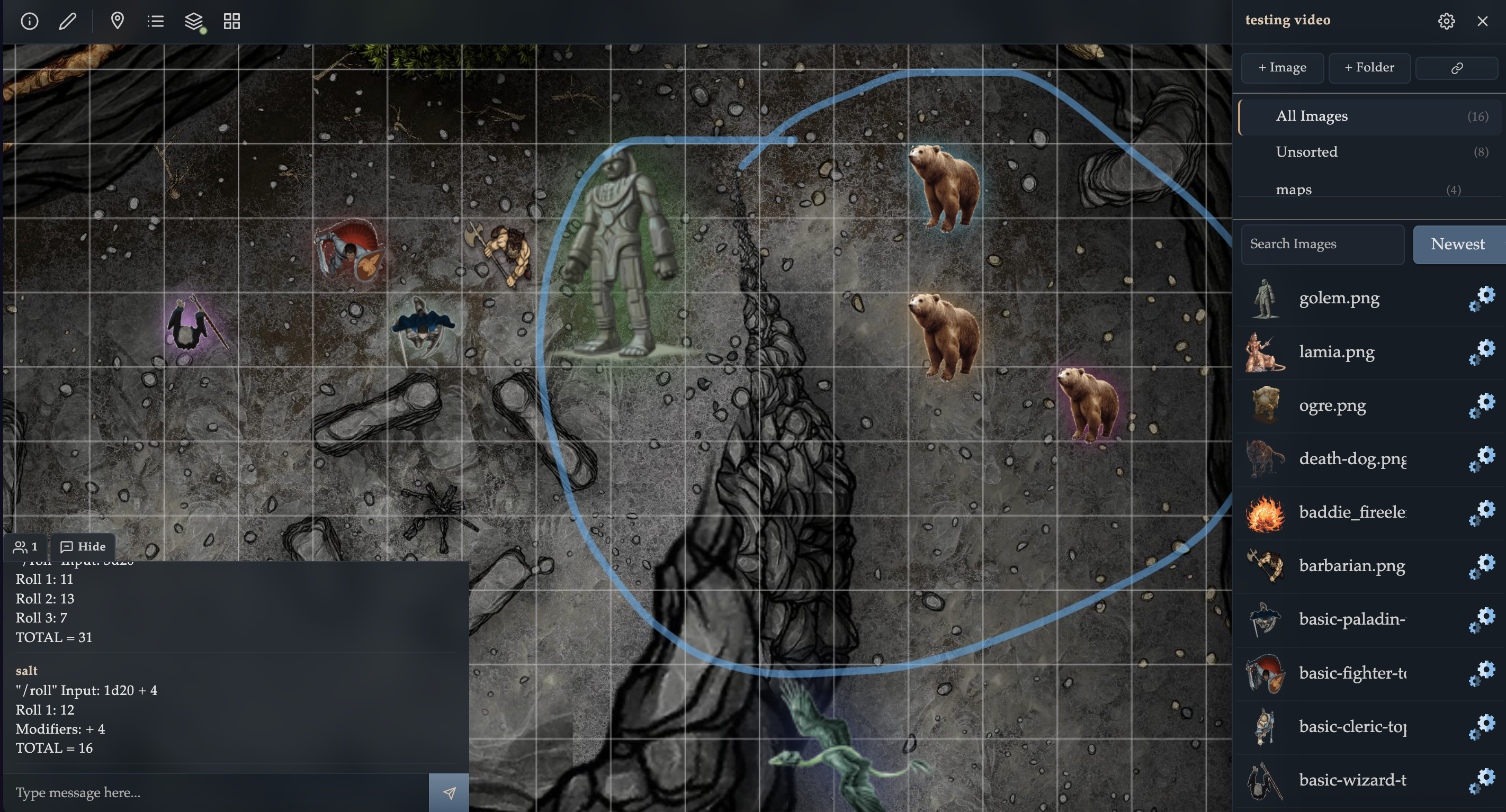
- Far Reach Co: share one link for fast player access on simple tables.
- Far Reach Co: keep load times and interface overhead lower so the table stays readable during play.
- Far Reach Co: move into persistent campaign tools later if the group becomes long-term.
- Result: you can keep one-shots light without giving up a path to deeper campaign structure.
Connected Tools Beyond The Table
- Character workflow: use online D&D 5E character sheets for connected campaigns.
- Campaign management: move into Wyrlds for persistent shared spaces.
- Rules reference: keep the SRD compendium open during live play.
- Music: add Far Reach Radio for synced session audio.