Free Syrinscape Alternative For Faster Tabletop Music Setup
If you like the idea of synced tabletop audio but want a lighter, playlist-driven workflow during live play, Far Reach Radio is free to start and worth a serious look.
Far Reach Radio | Discord Music Bot AlternativeIf You Are Searching For A Free Syrinscape Option
Far Reach Radio is free to start. Hosts can create a free account, use the standard playlist library, and share one listener link with players. Pro expands the catalog with additional exclusive playlists.
- Free host account - start a channel without paying up front.
- Free standard library - run scene-ready playlists for common session moods.
- No player accounts - listeners join from the link instead of creating accounts.
- Upgrade only if needed - use Pro if you want the full playlist catalog and broader coverage.
See Pricing for the current free and Pro breakdown.
Why GMs Compare Far Reach Radio And Syrinscape
Both tools aim to improve atmosphere at the table. The real difference is how much audio-management surface you want to operate while the game is moving.
- Shared goal - better mood, better immersion, and easier audio for online or in-person games.
- Main decision point - lighter playlist flow versus a deeper sound-set and sound-design ecosystem.
When Far Reach Radio Is The Better Fit
- You want a free way to try it - start with the standard playlist library before deciding whether you need Pro.
- You want less overhead - run one host panel and keep soundtrack changes quick.
- You want playlist-driven session control - switch scenes by playlist instead of building or managing more complex audio states.
- You want link-based listening - send one listener URL and let players join without extra account friction.
- You want original scene music fast - use curated playlists for combat, exploration, horror, town, and mystery without deep setup.
When Syrinscape May Still Be The Better Choice
This is not a claim that Far Reach Radio replaces every Syrinscape use case.
- Larger sound-set ecosystem - if your table depends on a much broader long-established sound library, Syrinscape may still be stronger.
- Deeper audio construction - if you want more elaborate sound-design workflows, scene building, or detailed audio layering, Syrinscape may fit better.
- Existing workflow lock-in - if your campaign already relies on its ecosystem, switching may not be worth the disruption.
What The Workflow Feels Like At The Table
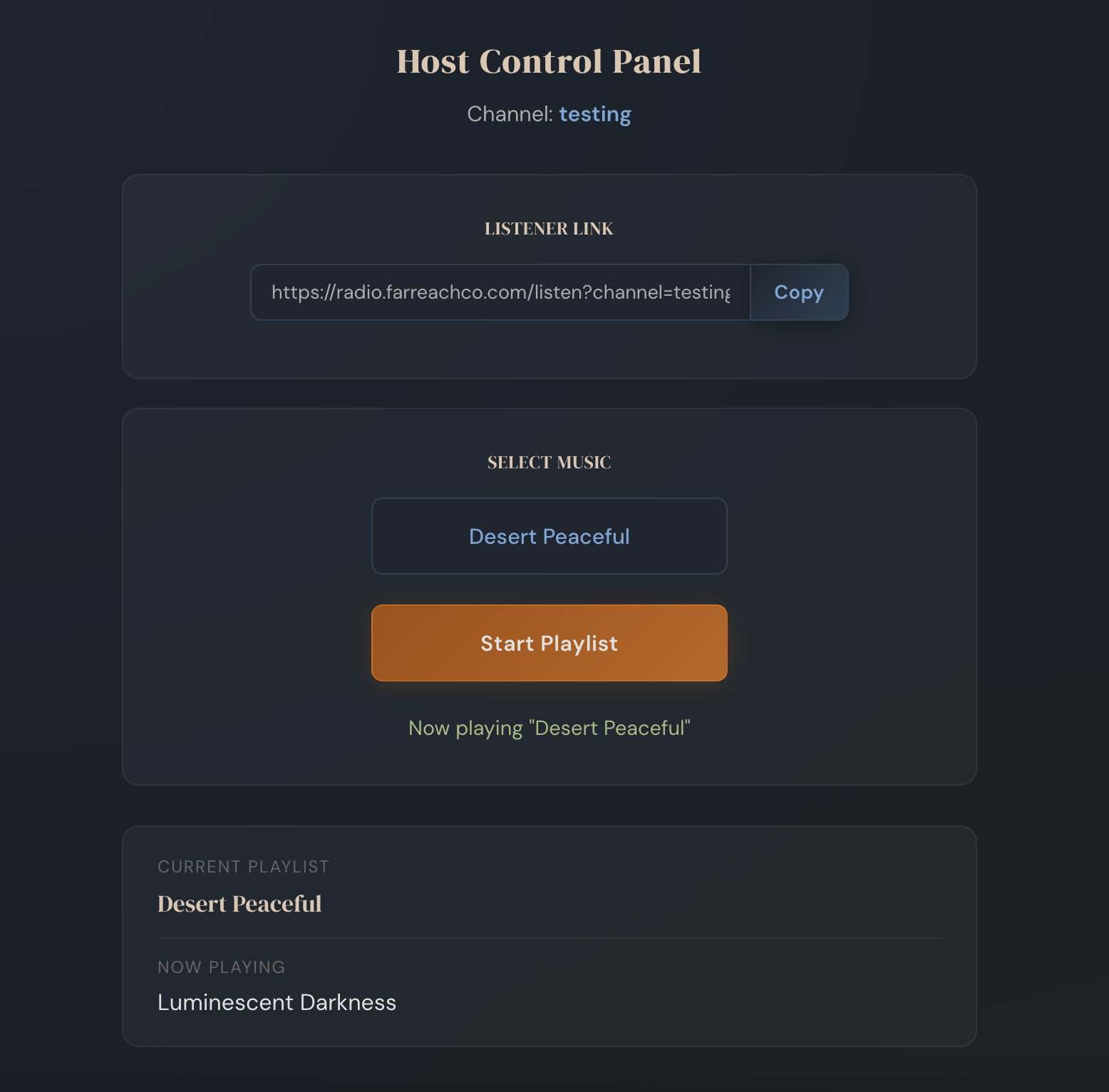
- Far Reach Radio: create a channel, choose a playlist, send one link, and keep moving.
- Far Reach Radio: treat music like a session support layer instead of a larger audio production surface.
- Result: lower control overhead when the GM needs to stay focused on pacing and player interaction.
Music Works Better When It Connects To The Table
- VTT sessions: pair Far Reach Radio with the No-Signup VTT.
- Campaign play: use Wyrlds to keep long-term groups organized.
- Rules support: keep the SRD compendium open during live sessions.
Want a free-start alternative with a lighter session-music workflow?
Create A Free Account Open The Host Panel See Pricing